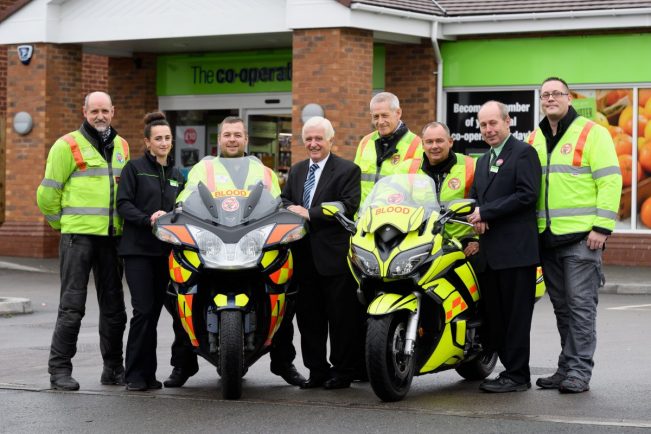
A HEROIC group of life-saving bikers has received a windfall thanks to shoppers at Rugby branches of Co-op.
The Heart of England Co-operative Society has handed £3,000 to the Warwickshire and Solihull Blood Bikes (WSBB), a team of volunteer riders and drivers who support the NHS by transporting blood, tissue samples and vital supplies outside of office hours.
Co-op shoppers were asked to choose worthy causes to receive a share of money raised through the sales of 5p carrier bags over the past six months.
With the most votes in Rugby, the WSBB received £3,000, while homelessness charity Hope 4 received £2,000, and the Carers Trust received £1,000.
In almost six years since the WSBB was first launched, the blood bikes have attended almost 7,000 incidents across the Warwickshire and Solihull communities.
Volunteer membership continues to grow and today the group includes more than 35 riders, six drivers, 40 other volunteers and five owner riders.
It is estimated that the WSBB helps save the NHS more than £35,000 a year in fuel and taxi expenses.
Already this year the group has invested £30,000 in two new motorcycles – and with more bikes in need of replacement, costs by the end of the year are expected to reach in excess of £70,000.
Don O’Brien, treasurer of the Warwickshire and Solihull Blood Bikes, said: “Without these donations Warwickshire and Solihull Blood Bikes would not exist. We would not be in a position to offer this free out of hours service to the NHS and therefore the local community.
“This donation alone is almost 50 per cent of our annual motor insurance premium, or it would enable us to purchase almost 2,343 litres, or 518 gallons, of petrol for our three motorcycles and car.
“To date in this last six month period we have spent £2,938 on fuel.”
Don added: “I would also like to say, on behalf of Warwickshire and Solihull Blood Bikes, a very, very big thank you to all of the Heart of England Co-operative Society’s wonderful customers who voted for us through the token scheme. Again without them our service to the community and the NHS would not exist.”