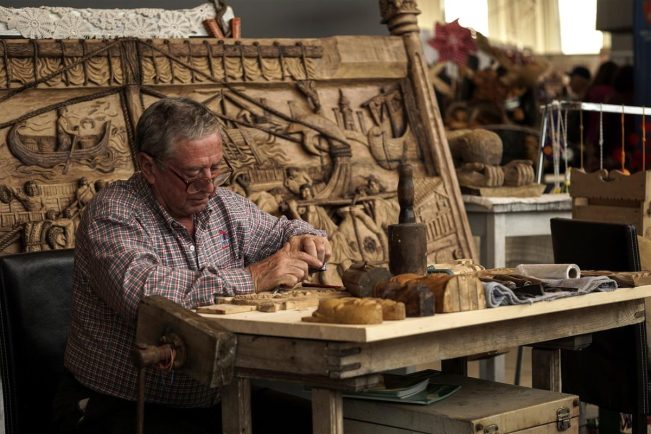
In an era of rapid technological advancement, the lines between traditional craftsmanship and industrial production are increasingly blurred.
Automation, once primarily associated with large-scale manufacturing, is now significantly influencing sectors deeply rooted in artisanal skill, from intricate jewelry making to bespoke carpentry.
This evolution presents a fascinating challenge: how can new technologies and automated equipment transform artisan workshops not by replacing human skill, but by enhancing it? The answer lies in a delicate balance, where innovation serves to elevate, rather than diminish, the timeless value of the handcrafted item.
Automation as an Artisan’s Ally: Precision and Efficiency
The introduction of automation into traditional crafts isn’t about mass-producing soulless replicas; it’s about empowering artisans with unprecedented levels of precision and efficiency. Imagine a jeweler using a laser for intricate cuts that would be impossible by hand, or a woodworker employing a CNC router to achieve perfectly symmetrical details in a complex design. These machine tools don’t eliminate the artisan’s vision or expertise; instead, they act as sophisticated extensions of their hands, allowing for the creation of more complex details, tighter tolerances, and greater production efficiency without sacrificing artistic integrity. This synergy frees up the artisan to focus on the creative aspects, design, and finishing touches that truly define a unique piece.
Elevating Craftsmanship Through Technological Support
The beauty of integrating automation into traditional crafts lies in its capacity to elevate the quality and precision of the handcrafted item. For centuries, the limitations of human hands and traditional tools dictated the scope of what was possible. Now, with the aid of automated systems, artisans can achieve levels of consistency and detail that were once unattainable. This allows for innovation within traditional forms, pushing the boundaries of design and complexity. Furthermore, automation can handle repetitive, strenuous, or dangerous tasks, improving working conditions for artisans and allowing them to dedicate their energy to the more skilled and creative aspects of their work.
Preserving Heritage While Embracing Progress
The delicate balance required for this integration is key. The goal isn’t to erase the historical techniques that define traditional crafts but to find ways for new technologies to complement them. This means thoughtful adoption of automation, where the artisan remains in control, guiding the machines rather than being guided by them. Workshops can implement automated processes for specific, high-precision steps while preserving manual techniques for the unique character, warmth, and subtle imperfections that are the hallmarks of genuine craftsmanship. It’s about recognizing that technology can be a powerful tool for preservation, ensuring that traditional crafts can adapt and thrive in the modern world while retaining their inherent value.
The Future of Craft: A Symbiotic Relationship
The future of traditional crafts lies not in a stark choice between tradition and innovation, but in a symbiotic relationship between the two. Automation, when approached thoughtfully and strategically, can be a catalyst for growth, opening new avenues for creativity, enhancing product quality, and improving efficiency. By embracing technological supports while honoring traditional techniques, artisans can continue to produce exquisite, high-quality items that combine the soul of human skill with the precision of modern engineering. This balanced approach ensures that traditional crafts remain relevant, competitive, and truly exceptional in the global marketplace, proving that the handcrafted item, far from being a relic of the past, is evolving into something even more extraordinary.
In this way, automation becomes not a threat to tradition, but a bridge connecting the legacy of craftsmanship with the limitless potential of the future, where human creativity and technological precision can coexist, collaborate, and collectively shape new standards of excellence in the handmade arts.