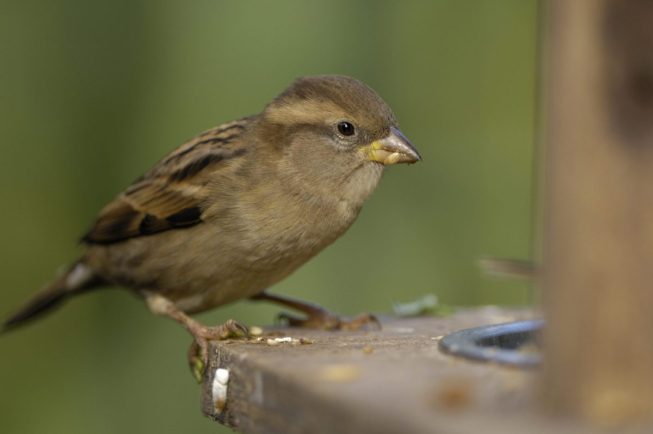
HOUSE sparrows once again came out on top of a survey of Warwickshire’s most common garden birds.
The results of this year’s Royal Society for the Protection of Birds (RSPB) Big Garden Birdwatch – in which over 6,000 people in Warwickshire spent an hour counting birds in their garden – saw the blue tit and the woodpigeon take second and third place in the county.
Across the UK, the jay moved up nine places to number 23, an increase of 73 per cent compared to 2021 numbers.
Each autumn, jays, a colourful member of the crow family, can often be seen flying back and forth finding and hiding acorns to help see them through the winter. These are then hidden in the cracks and crevices of trees, but also in leaf litter on the ground. An individual jay can store around 8,000 acorns each year and many remain buried to grow into oak trees.
The RSPB’s Chief Executive Beccy Speight said: “We don’t know the reasons for the sudden increase in jay sightings this year. It may be down to food availability as we have reports that last year was poor for acorns, but whatever the reason a sighting of this stunning bird is enough to raise one’s spirits.
“It’s been brilliant to see so many people taking part again this year, taking time out to watch and reconnect with birds and then generously submit their sightings to help RSPB scientists gain some insights into how our garden birds are faring.”
Big Garden Birdwatch results also found a small increase in greenfinch number compared to 2021, giving hope of a population recovery.
In recent years the greenfinch has suffered a population crash – 62 per cent since 1993 – caused by a severe outbreak of the disease trichomonosis, prompting the species to be added to the UK Red List last year.
The house sparrow remained at the top of the national Big Garden Birdwatch rankings as the most commonly seen garden bird, with more than 1.7million recorded sightings throughout the weekend. The blue tit and the starling remained in the number two and three positions respectively.
Throughout the first half of the spring term, the nation’s schoolchildren took part in the RSPB’s Big Schools Birdwatch. The UK-wide survey of birds in school grounds saw almost 60,000 school children and their teachers spend an hour in nature counting the birds. The woodpigeon was the most numerous species seen with an average of eight per school – and was seen in 83 per cent of all schools that took part. The blackbird was a close second with an average of seven per school.
Beccy added: “Connecting with nature doesn’t have to stop with Big Garden Birdwatch. Spring sees the return of nature’s biggest music festival, the dawn chorus. Open your back door, a window or simply step outside and listen.”
Dawn Chorus Day takes place on Sunday 1 May 2022. The RSPB will also be hosting special Dawn Chorus events on its nature reserves. Visit www.rspb.org.uk/dawnchorus for more information.