THE ROLE of women in war is explored in artist Indre Serpytyte’s new exhibition, When the Golden Sun is Sinking.
The exhibition focuses on the objects and materials of conflict, from Government propaganda posters to the trench art created by soldiers in the First World War.
Serpytyte has delved into the archives of the Imperial War Museum and museum collections across the Midlands for the project.
The artist contrasts the Government propaganda produced to promote the work of the ‘munitionettes’, who worked in factories manufacturing arms for soldiers on the frontline in the First World War, with first-hand accounts of the women who worked long shifts in punishing conditions.
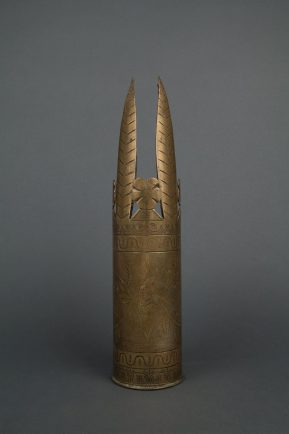
Vases made from spent ammunition shells lead Serpytyte to explore a range of themes. The shells, many of which were manufactured by women, were engraved by Tommies in the trenches before being sent home to loved ones as decorative ornaments.
The exhibition features a number of trench art vases, together with photographs of vases taken by Serpytyte, who works with photography, sculpture and installation to explore the impact of conflict and war on history and perception.
Her work has been exhibited at the Tate Modern and collected by the Victoria and Albert Museum.
Nikki Grange, Rugby Art Gallery and Museum’s arts, heritage and visitor services manager, said: “We’re delighted to host this new exhibition by Indre Serpytyte.
“During the Second World War, Rugby was home to its own ‘munitionettes’, working at the British Thomson-Houston factory, so the themes explored in When the Golden Sun is Sinking have a real connection with the town’s social history.”
Commissioned by Grain Projects, When the Golden Sun is Sinking is open at Rugby Art Gallery and Museum from May 7 to June 22.
Visit www.ragm.co.uk for more information.