
UNSUNG wartime heroes will be among those honoured by a new memorial.
Veterans minister, Al Carns MP, has confirmed plans to recognise members of the RAF’s Photographic Reconnaissance Units, which included recruits from Warwickshire. It follows a memorial campaign which won cross-party support.
The minister was speaking during a parliamentary debate ahead of the 80th anniversary of VE Day, a debate in which several MPs also mentioned the contribution of the PRU in the Allied victory 80 years ago.
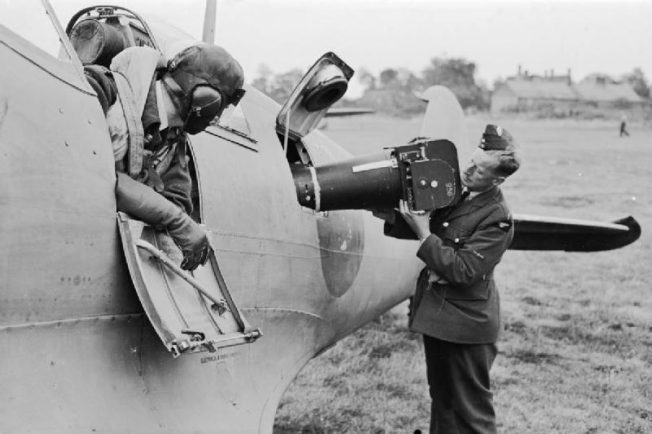
The Photographic Reconnaissance Units (PRU) was formed on September 24, 1939 and throughout the Second World War it operated highly dangerous, clandestine photographic reconnaissance operations over all theatres of operation, and captured more than 26 million images of enemy operations and installations during the war.
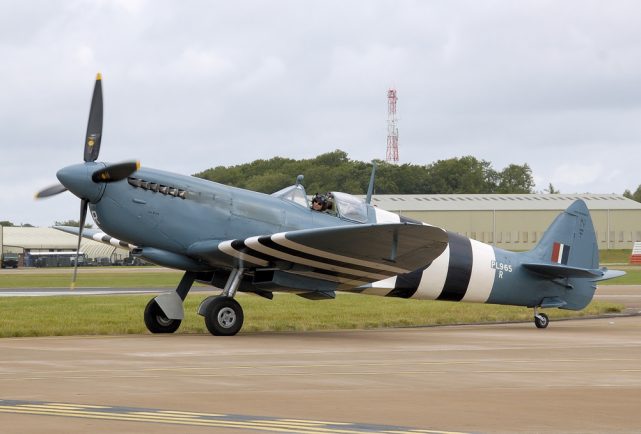
The purpose of the PRU was to provide up-to-date intelligence to strategically plan the Allied actions in the war. Flying Spitfires and Mosquitos, the intelligence it gathered was used by all the armed forces, giving same day intelligence on enemy activity.
The intelligence provided by the PRU was used in the Cabinet War Rooms – now the ‘Churchill War Rooms’ located underneath the Treasury – and was instrumental in the planning of major operations – D-Day and the Dambusters Raid, the monitoring of major shipping movements such as the Bismarck and Tirpitz, and the locating of the site of the V1 and V2 rocket launching site at Peenemünde, as well as many other intelligence successes.
Due to the clandestine nature of their operations – they flew solo operations, unarmed and unarmoured – the death rate was nearly fifty percent.
But despite having one of the lowest survival rates of the war – life expectancy in the PRU was around two and a half months – there is no national memorial to the PRU.
Since 2021, the Spitfire AA810 Project has campaigned to establish such a memorial to the 1,746 PRU pilots and navigators.
It is also intended that the memorial will recognise the Photographic Interpreters, who were based at RAF Medmenham, in Buckinghamshire. Using stereoscopy, they analysed the photographs for intelligence, with the intelligence report arriving at the Cabinet War Rooms within 24 hours of the plane landing.
The 635 Photographic Interpreters – a third of whom were women – included the likes of actor, Dirk Bogarde, and Sarah Churchill, the wartime Prime Minister’s daughter. Their role was crucially important to the entire operation, as without their skill and analysis, the millions of photographs would not have produced the war winning intelligence that it did, ensuring that the pilots sacrifice was not in vain.
International Effort
The memorial – which is intended to be placed outside the Treasury, close to the entrance of the Imperial War Museum’s Churchill War Rooms, facing St James’ Park – also intends to recognise the internationalism of the PRU, with 24 different nationalities confirmed to date as having served in photo reconnaissance, with countries from every continent represented.
Rugby MP John Slinger has been a staunch supporter of the memorial campaign.
He said: “I am delighted to support this fantastic campaign to commemorate those who served in the Photographic Reconnaissance Units.
“This includes Geoffrey Emmett, Ralph Farmer, Ernest Fielding, and Thomas Osborn, who served admirably under exceptionally difficult conditions.
“I look forward to working with the Spitfire AA810 Project to establish this memorial and I look forward to being able to pay my respects there once it is completed.”
Local Heroes
While the PRU had many different nationalities serving in it, it was still made up predominantly by servicemen from throughout the United Kingdom. Among those who served in the PRU were Rugby-born Geoffrey Emmett, Ralph Farmer, Ernest Fielding, and Thomas Osborn.
Flight Lieutenant Geoffrey Emmett – At the outbreak of war he was working as a commercial artist.
He carried out his initial training in Hastings in November 1939 and then carried out navigator training in Coventry at the start of 1940. He served operationally through the Battle of Britain with 236 Squadron at RAF St. Eval, Cornwall.
In early 1941 he carried out ferrying duties over the Atlantic before joining 140 Photographic Reconnaissance Squadron in August 1941. He would serve with 140 as a navigator mostly in Mosquito aircraft until September 1944 when he took a ground role.
Leaving the RAF in November 1945 he died in Rugby in 1990.
Flight Lieutenant Ralph Bernard Farmer – was born on Boxing Day 1919. He joined the RAF in January 1937 and after pilot training he became an instructor, first at 10 Service Flying Training School RAF Tern Hill, then at 32 SFTS Moose Jaw in Canada where he arrived in October 1940.
He followed this with a posting as an instructor in No.1 Torpedo Training School before going operational with 259 Squadron flying Catalina aircraft on anti-submarine patrols. Transferring to 542 Photographic Reconnaissance Squadron, he became operational flying unarmed Spitfires over Europe from October 1944 until the end of the war.
Flight Officer Ernest Angus Fielding – Training as a pilot, he joined 681 Photographic Reconnaissance Squadron flying Mosquito aircraft and was posted to Burma.
In November 1943, the then 23 year-old Ernest was flying a photographic reconnaissance mission to Rangoon when he was seen by a Japanese Hayabusa crew. They crept up on Ernest’s Mosquito and shot the aircraft down. Ernest and his navigator, New Zealander Ronald Alfred Turton, were killed instantly and both are buried in Burma.
This was the first combat engagement of a Mosquito in the Far East during the Second World War.
Pilot Officer Thomas William Osborn DFC – Little is known of his war service other than he was operational with 540 Photographic Reconnaissance Squadron where he was awarded the DFC in August 1944.
Working as a painter pre-war, in 1937 he passed away in Rugby in 1972.